

While lecturing on “Historical Heritage and Tourism Resources” at Heian Jogakuin University, our CEO came up with the idea of using VR to protect cultural properties and devised the business model

About
About DiO
About DiO

2016
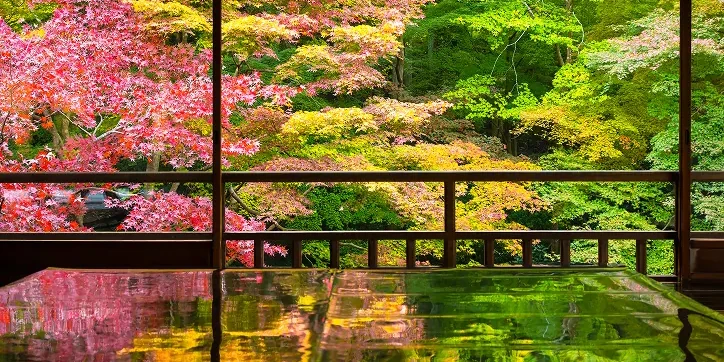
While lecturing on “Historical Heritage and Tourism Resources” at Heian Jogakuin University, our CEO came up with the idea of using VR to protect cultural properties and devised the business model
2017
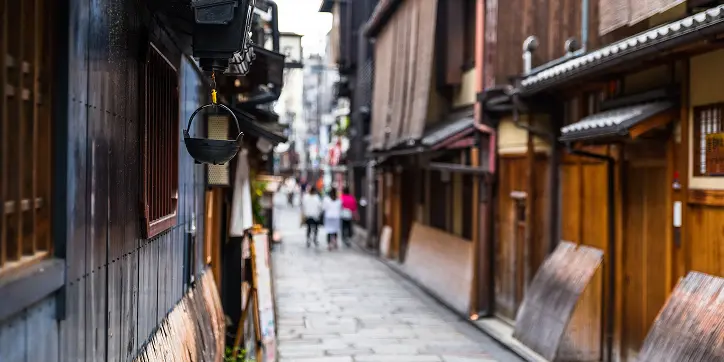
Company founded
Visualization technology: reverse engineering (capturing real objects as data using laser technology and other means, and digitizing them), difference analysis (extracting information on change from differences against fixed points in the past, present and future), and 3D modeling (visualizing objects such as factories as 3D models and integrating their internal history information)
2018
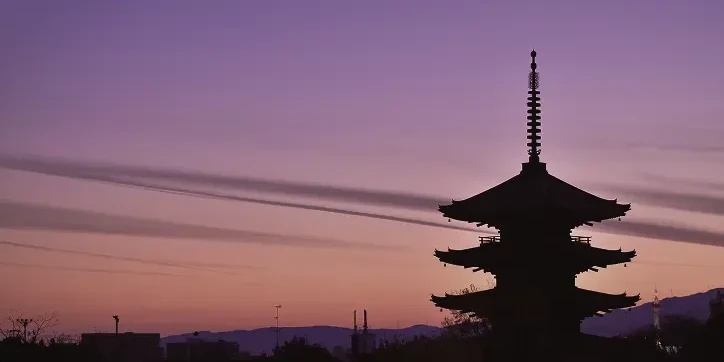
Recreated tangible and intangible cultural properties at tourist sites, centred on shrines and temples across Japan, in high-definition VR
2020
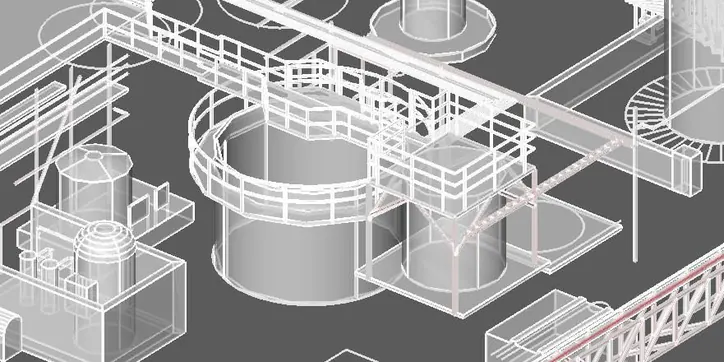
Asset assessment technology: aggregating information such as a structure's piping and wiring, temperature, pressure and damage to visualize the degree of deterioration
Visualizing “places likely to fail” in piping and equipment in plants and factories through deterioration prediction using the finite element method (FEA)
Industry–academia collaboration: Professor Keiji Murakami of the Ritsumeikan University Graduate School and others (simulation-based prediction of partial deterioration), and Professor Emeritus Jun Kanda of The University of Tokyo (building structure and seismic information)
2021
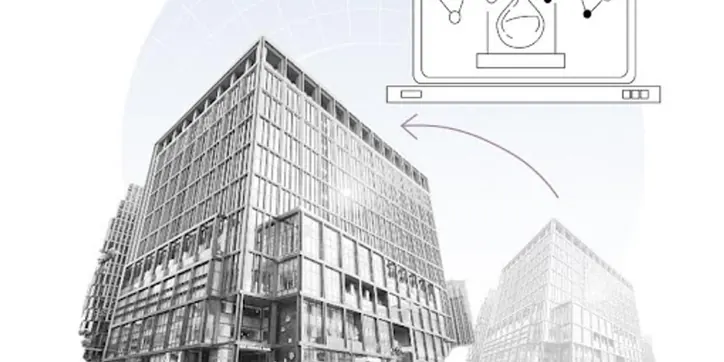
Built a business model for experiential virtual stores
Renamed the company DiO in preparation for an IPO
Structural analysis business: acquiring and analysing information on the surface and interior of structures. Parts managed by eye, such as piping and equipment inside factories and facilities, are managed with BIM data, contributing to better safety and maintainability
2022
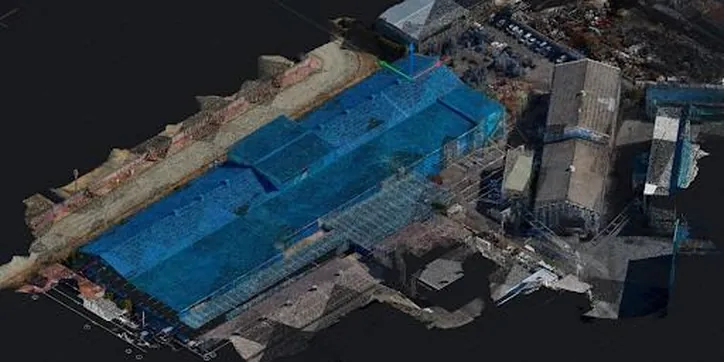
Built various business models using point cloud information
2023
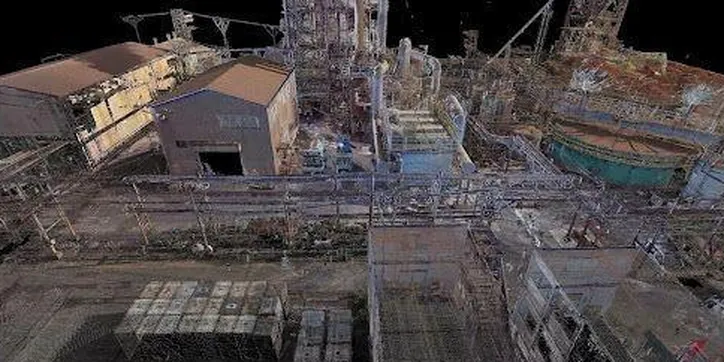
3D structure data composition business: composing the shapes of 3D structures that reverse engineering alone cannot reproduce. Drawing on our technology and experience in 3D digitization of cultural properties, we handle high-quality BIM conversion of factories and plants and the creation of high-precision point cloud data
2024
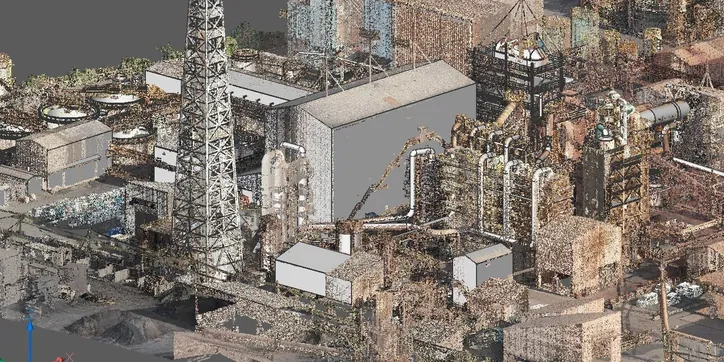
Applied digital technology developed through cultural property protection to environmental fields and the analysis of large structures, building unprecedented new business models
Difference analysis business: treating changes in structures over time as “differences” and integrating the deterioration of each piece of equipment to calculate the present and future value of a whole factory. An objective asset assessment that can also be used in M&A and mergers
2025
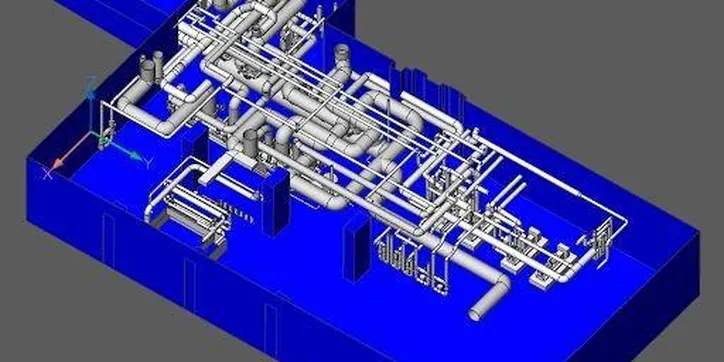
Data utilization and management business
Data derivation business: predicting deterioration from acquired data and providing information on the best timing for maintenance and equipment replacement
Data management business: synchronizing, updating and managing entrusted data on a digital twin and, combined with AI analysis, finding asset value
2026
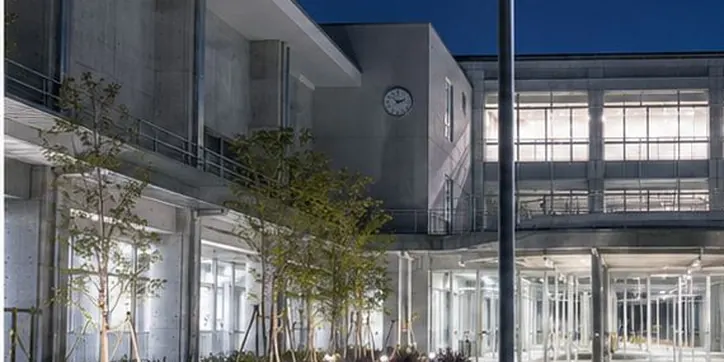
LED adoption support business: with the 2027 ban on manufacturing fluorescent lamps for general lighting in view, connecting manufacturers, trading companies and construction partners in open-call proposal projects of local governments across Japan
DiO handles project management and the development of an AI-based automatic cost estimation and ordering system
There are about 700 million lights across Japan not yet converted to LED, and the market for LED conversion by local governments is expected to keep growing strongly
About
I was born and raised in Kyoto, one of Japan's ancient capitals. Looking back on my life, I feel that I have come across “two strokes of good fortune”
The first stroke of good fortune is having been born in this ancient capital itself. The area where I grew up has especially many cultural properties even within Kyoto, and naturally I was able to come into contact with history, culture and tradition from a young age. Cultural properties are all old things that have accumulated a long history, yet there was never any fragility in them; to me they were “powerful” presences. Among them, I feel I was unconsciously taught the meaning of “living”. Even as a child I was convinced that the will of the many people who protected cultural properties in the past always carried within it a strength that endures for future generations, and that this is why they stand calmly before us now
The other stroke of good fortune is the time I spent with my grandfather. My grandfather, “Shinzo”, founded a kimono shibori-dyeing shikkai business* in a single generation and grew it into an enterprise
*A “shikkai” was a director who took orders from customers and wholesalers, came up with design ideas, and coordinated the work by instructing the craftspeople in the many stages of kimono making to finish a roll of kimono fabric
My grandfather was born in the Meiji era and was seriously injured at the age of 10 when he fell from a tall tree. He did not receive adequate treatment, and it is said he grew up with a curved spine. After finishing elementary school he was sent as an apprentice to a kimono shop in Kyoto, and after more than ten years of hardship he set up his own shikkai shop in 1931. He lived through turbulent times without formal education and with a physical disability, and in his later years I could only follow him as he worked silently in front of white silk fabric. I remember that there was nothing of a weak person about him; rather, he was overflowing with dignity and the will to “live powerfully”
Even now, I remember my grandfather, who was always by my side and rejoiced in my growth as if it were his own
After I grew up, I brought digital technology into the world of textile dyeing that my grandfather left behind, and this lives on in DiO's business today. A sincere attitude of “protecting” the cultural properties I faced from childhood is now at last beginning to take root in DiO's business
People and buildings alike, everything in this world will one day decay or change. So people extend their healthy life expectancy, buildings are made more earthquake-resistant, and we move forward resisting every kind of deterioration. Yet I feel no malice in this, as if trying to overpower nature. Everything that has come into this world has the will to exist “powerfully”; the wish to protect it continues, and by sharing among all of us the meaning of “living” in coexistence with nature, it is passed on to what comes next. If every person is born into this world together with some kind of “good fortune”, then even with the limit of a lifespan, we must entrust tomorrow, strongly, to the word “coexistence” — with that thought, I work every day to carry on DiO's business
Representative Director: Yoshimi Ippitsu

Authored book

1866 KYOTO: The Last Emperor (in Japanese)
Author: Yoshimi Ippitsu
Release date: 2025/10/1
ISBN-10: 4911540044
Price: ¥1,760 (tax included)
Publisher: Diamond Business Kikaku Co., Ltd.
Open the country or expel the foreigners, overthrow the shogunate or support it? In the turmoil of the late Edo period, the last emperor in Kyoto entrusts his prayer for peace to the shogun Yoshinobu. A story that explores an untold “what if” of late-Edo history.
In the 80 years since the end of the war in 1945, we Japanese have fortunately enjoyed peace without experiencing war. In contrast, during the 80 years from the Meiji Restoration to the end of the war, Japan went through a long and painful era of war. In the late Edo period, as the Tokugawa shogunate in Edo rapidly lost its authority, Choshu and Satsuma rose to prominence backed by the authority of the imperial court in Kyoto. The new Meiji government, having overthrown the shogunate by force, then committed itself to building a modern state through militarism and imperialism that simply imitated the great powers. Its main purpose is said to have been revising the unequal treaties and raising Japan's international standing. In other words, taking 1866 — the year the Tariff Convention, one of the unequal treaties, was concluded — as a turning point, this unusual historical novel tries to depict a “what if” of history: if different political decisions had been made around that time, could Japan have avoided war?
3D Modeling Business and DX Consulting Business: we offer online consultations (video meetings). Pricing for Ichigen-Cho is shown on the SaaS Business page.
Book an online consultationSee Ichigen-Cho
Phone:075-432-8180(9:00–17:00 JST, excluding weekends and Japanese holidays)
No minimum term — cancel anytime. Full refund on your first purchase (until 23:59 on day 30 for monthly, day 14 for annual plans), and your data is kept for 50 days after cancellation.
Hello, I am Shinzo, your AI support guide. Ask me anything about Ichigen-Cho's 5 steps, the 3 screen modes, pricing plans (Method A), foundational papers, or technical terms.
On-site photo support switches to a step-by-step guided mode when the page is opened on a smartphone from a one-time QR issued in Ichigen-Cho on a PC.